
Chiropractic, News, Wellness
Meet Village Medicine's Chiropractor, Dr. Lauren Aklinski, DC, MS
Chiropractic works with your body to relieve physical stress and help it heal and function better.
Join me in getting to know our new chiropratic provider, Dr. Lauren Aklinski. We are excited our patients are able to have ease and access to a wonderfully caring chiropractor while getting seen at Village Medicine.
Q: What did that first adjustment feel like, both physically and mentally, that made you realize this was your true calling?
Interestingly, what drew me to chiropractic wasn’t a search for pain relief or to recover from an injury, which tend to be the common reasons people go to see a chiropractor. Back in high school in the Midwest I wanted to pursue medical school because of an interest in health and science. No one around me went to a chiropractor, so I didn’t consider it as an option yet. In college I had a friend that came from a family of chiropractors, and after some discussions about health being more than just the absence of disease, they suggested I try chiropractic as a more natural form of healthcare. That suggestion ended up redirecting my entire career.
Out of all the chiropractors in Chicago, my first chiropractor turned out to be someone with a particularly holistic approach. During a gap year after college, I randomly found Dr. Tom O’Bryan through an employment ad, and his holistic approach made a real impression on me. Years later he became a leading voice on gluten sensitivity and autoimmune health, and has since written books on non-celiac gluten sensitivity and managing autoimmune conditions.

Going back to my first adjustment with him, I honestly remember laughing. It was such a novel sensation that it made me giddy. I wasn’t in pain going in, so I wasn’t expecting to notice anything dramatic, but I couldn’t believe how light and connected to my own body I suddenly felt. Our brains are remarkably good at tuning out what’s happening in our bodies. I thought I felt fine, until I felt better.
In addition to chiropractic adjustments, Dr. O’Bryan had me try my first cleanse, and I was fascinated by these other ways to explore health. That experience showed me chiropractic was never just about the spine, it’s about whole-body prevention. That’s what pulled me away from a “treat the disease” mindset and toward helping people optimize their health before something goes wrong.
Q: For someone who’s never been to a chiropractor, or might be a little nervous about it, what actually is a chiropractic adjustment?
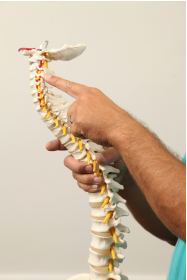
Chiropractic adjusting is a form of physical medicine that primarily treats joints, the space where two bones connect, most often in the spine but also in extremities like knees, shoulders, and wrists. They also affect soft tissues like muscles (aiding muscle pain and tension) and the way the nervous system communicates (helping to alleviate pain and improve balance). We’re still learning, since new information continues to emerge from chiropractic research.
Whether a patient comes in to see me for pain, limited mobility, or even to improve their posture, I go through a careful assessment to identify which joints are irritated (or not moving properly) prior to doing any adjustment. Those joints can be part of an abnormal movement pattern that either influences, or results from, injury or symptoms like stiffness, tension, and pain. A chiropractic adjustment, or joint manipulation, is a carefully and specifically-directed thrust, movement, or pressure, into a joint using my hands in order to correct its motion or position. For patients that need or want something more subtle, it can also be done using an instrument adjusting tool like an Activator, or by placing wedges called pelvic blocks under the hips.
Manual, hands-on adjustments can produce a “pop” sensation or sound, which isn’t a bone cracking, it’s the sound of an air bubble releasing as the pressure in the joint space changes. I also use techniques that don’t make the joint pop at all, like the Activator I just mentioned, or movements from the table called a “drop-table” adjustment.
Q: What’s a common misconception about chiropractic care?

That we just “crack backs”, you have to be in a lot of pain to need chiropractic, and that adjustments are scary. In reality, an adjustment doesn’t just affect the joint, we’re still learning about the many ways it can change the body’s physiology. Not every patient is adjusted the same way or with the same type of adjustment. While there are a lot of videos online that can look dangerous, hands-on “manual” adjustments don’t use excessive force, they’re designed to move a joint within its normal physiologic range of motion.
Outside of a chiropractic adjustment, sometimes the most useful thing I can offer is education, exercises and stretches, or a referral to another provider. I also spend real time listening and completing a thorough physical exam before deciding on any treatment. After an exam, I always explain what type of adjustment I recommend and what to expect, so there are no surprises. I want to understand why a problem started and how it’s affecting your life, not just where it hurts, and what type of treatment you’ll be most comfortable with to get the best results.
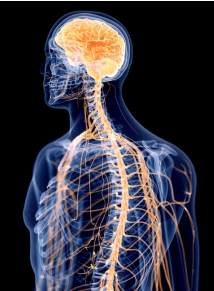
Q: How do you describe what an adjustment actually does for the nervous system and overall well-being?
This is where the research has moved a long way in recent years. For a long time, people pictured a “pinched nerve” getting un-pinched, or a “bone out of place” getting put back “in place” after an adjustment, and we’ve since learned that’s not quite how it works. Chiropractic researchers like Dr. Heidi Haavik are instead discovering that chiropractic adjustments influence
something called neuroplasticity within our nervous system. I’ll address this more in detail in the next question for those that are interested in the science behind chiropractic.
An adjustment actually has several different effects on the body: it restores normal motion to a joint that’s gotten stuck; it improves overall alignment and balance so that forces get distributed evenly through your body instead of wearing down one area; and neurologically, it sharpens a sense called proprioception and the two-way signaling between your spine and brain. All of these effects are important for pain and mobility, and for helping your whole musculoskeletal system function the way it’s supposed to.
Q: Can we nerd out on proprioception and neuroplasticity for another second?
Let’s look at the normal feedback loop between your brain and spine, so we can better understand what happens when things go awry. We know that your brain normally sends signals downstream telling your spine to move or stabilize, while thousands of tiny sensors in your spinal joints and muscles, called proprioceptors, send signals back up, reporting position, movement, and load. That upstream information is how your brain knows where your spine is in space (called proprioception).
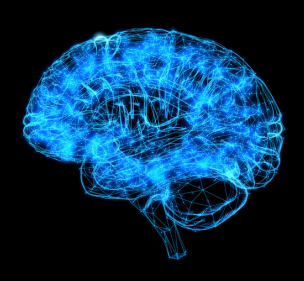
When the small joints between your vertebrae (called facet joints) get stiff or stop moving normally (what chiropractors call a joint motion dysfunction or subluxation) those upstream signals become less accurate. Over time, the brain starts misreading or amplifying sensory signals, which can show up as pain, stiffness, muscle guarding, or a general sense of being less coordinated (a pattern researchers call mechanical hypersensitivity). A chiropractic adjustment is a precise stretch to that facet joint, which restimulates those sensors and restores clearer, more accurate signaling to the brain.
Every movement, every injury, and every experience shapes how your nervous system functions. Research suggests chiropractic adjustments may influence neuroplasticity by improving the quality of sensory information traveling from the spine to the brain. Neuroplasticity is the process of your brain constantly adapting. Better information gives the brain the opportunity to build a more accurate “map” of the body, which may contribute to improved movement, coordination, and pain regulation. Scientists are still learning exactly how these changes translate into long term clinical benefits, but the evidence that spinal manipulation affects brain function keeps growing.
Neuroplasticity can work against you if those adaptations go the wrong way, or, once accurate signaling is restored, work for you, and we’re learning chiropractic plays a role in tipping that balance in the right direction.
Q: What conditions do you treat, and how do you know when it’s time to see a chiropractor?
It’s not just about back pain, though that’s certainly common, especially the tech neck, shoulder tension, and posture concerns I see from Seattle’s desk- and device-heavy lifestyle. I also treat headaches, TMJ, and injuries from car or work accidents, along with the general aches that build up over years of sitting. Beyond that, I see a lot of patients navigating big physical transitions: pregnancy and postpartum recovery, or wanting to stay strong and mobile as they age. I’m certified in the Webster Technique, a specialized approach for optimizing pelvic alignment during pregnancy, and chiropractic can also help manage pain from arthritis. And I love working with people who’ve “tried everything” and were told there’s nothing more to do, there usually is.
As for timing, you don’t have to wait until it’s severe. If pain or stiffness is keeping you from gardening, sleeping comfortably, exercising, or getting down on the floor with your kids or grandkids, that’s usually a sign it’s worth coming in. And plenty of my patients keep seeing me even once they feel good, coming in monthly or seasonally for a preventive tune-up to stay ahead of problems before they start.
Q: What if I’m hypermobile?
I often treat hypermobile patients, some who simply have naturally loose joints, others diagnosed with Ehlers-Danlos Syndrome (EDS). For these patients, I use low-force adjustments aimed at restoring proprioception and reducing pain, rather than stretching the joint further, and I’m careful never to over-adjust. Joint stabilization is usually the real key, so I’ll build in stability exercises or refer out to a physical therapist who can co-treat alongside me
Q: With a Master’s in Human Nutrition alongside your Doctorate, how does that shape the way you approach pain, and did it influence your decision to join Village?
I never assume that alleviating pain just boils down to a chiropractic adjustment. Everyone responds differently to chiropractic care, so I spend the first few visits simply observing what changes, and what doesn’t. If symptoms don’t respond enough, or they improve but keep recurring, I know something more is at play, and I start looking more broadly. I’ve traced plantar fasciitis and chronic low back pain back to a dairy allergy, watched hypothyroidism show up as muscle pain and tightness, and seen estrogen deficiency during perimenopause associated with frozen shoulder.
Catching those factors and seeing the whole picture can be hard to do working alone, it really takes a team. That’s a big part of why I wanted to join Village: it’s an integrative, collaborative setting where I can refer to and work directly with our primary care and specialist providers, so patients get care from every angle instead of just mine.
That mindset has a lot in common with our naturopathic doctors here at Village, who take a similar deep dive into how your hormones and other systems are functioning. We’re both looking to understand what’s actually breaking down, not just treat the symptom in front of us.

Q: What’s one thing you wish every patient knew?
Whether you’ve had pain for two weeks or twenty years, you don’t have to figure it out alone. Chiropractic works with your body to relieve physical stress and help it heal and function better. I think of it as a reset: we all get off track sometimes and need support to stay well, not a magic fix that makes everything disappear in one visit. If the root cause is still there, weak hips, poor posture, whatever it is, one adjustment won’t make it disappear for good, which is why we usually work together over a series of visits, a bit like working out, until the changes really take hold. My goal is to help you understand what’s actually causing your symptoms, build a plan that fits your life, and get you back to doing the things you enjoy.
Learn More About Dr. Alinski and Her Practice | Learn More About Chirpractic Services at Village Medicine | Request Chiropractic Appointment Information

In Gratitude
Dr. Tara Johnie Shelby
Naturopathic Physician
Founder & CEO, Village Medicine