
News, Reflection
When Emotions Collide: Understanding the Beautiful Complexity of Human Feelings
Emotional complexity isn't a problem to solve, it's a sign of a rich, fully-functioning human experience.
Brooke Heyman, ARNP, PMHNP-BC
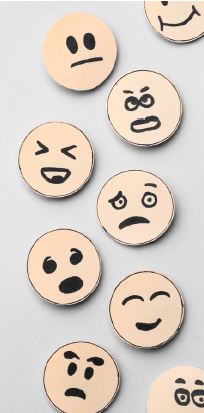
Have you ever felt happy and sad at the same time? Or noticed that butterflies in your stomach could mean either nervousness or excitement? You’re not alone and you’re not confused. You’re experiencing something beautifully human: the intersection of emotions.
The Dance of Mixed Feelings
Think of emotions like colors on a painter’s palette. When blue and yellow mix, you get green, something entirely new. Our emotions work similarly. When different feelings combine, they create rich, complex experiences that are often more accurate descriptions of what we’re actually going through.
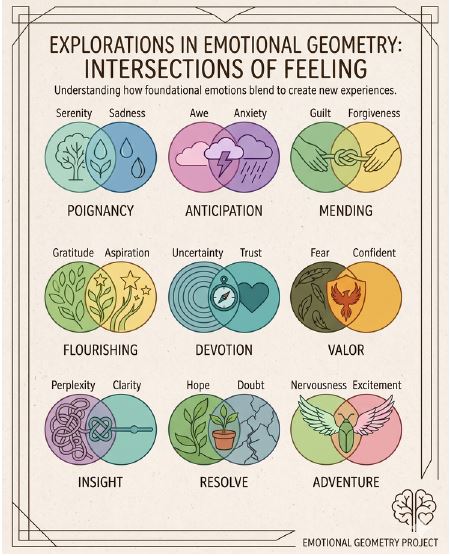
Consider nostalgia, that bittersweet feeling when you remember something precious from your past. It’s not pure joy or pure sadness, but both dancing together. Or think about courage, which isn’t the absence of fear, but rather confidence paired with vulnerability, creating the strength to move forward despite uncertainty.
Why This Matters for Your Mental Health
Understanding that emotions can overlap and combine is incredibly freeing. It means you’re not “broken” if you feel multiple things at once. Conflicting emotions are normal, like feeling grateful yet envious, or hopeful yet doubtful. Complex feelings deserve acknowledgment, not judgment.
When we recognize these emotional intersections, we can be more compassionate with ourselves and others. That feeling of being intrigued when you’re both scared and curious about something new? That’s your psyche working perfectly, balancing caution with growth.
Embracing Your Emotional Complexity
The next time you’re feeling something that seems contradictory, pause and ask: “What emotions might be mixing here?” You might discover that your anxiety and excitement about a new opportunity is actually creating a sense of thrill, and that’s not only okay, it’s wonderful.
Take the powerful combination of hope and doubt, which creates what we call seeking. This happens all the time in real life. When you’re considering therapy for the first time, you might feel hopeful about getting better while simultaneously doubting whether it will work for you. This creates a seeking energy, that drive to explore and find answers despite uncertainty.
If you’re thinking about changing careers, you may hope for something more fulfilling while doubting your abilities. That mixture propels you into seeking mode, researching options, talking to people in different fields, and gradually building clarity.
In relationships, you might hope for deeper connection while doubting whether you’re worthy of love. This creates a seeking behavior where you cautiously but persistently look for evidence that connection is possible.
Seeking is actually a beautiful emotional space to inhabit. It means you haven’t given up (that’s the hope part), but you’re also being realistic about challenges (that’s the doubt part). This combination keeps you moving forward while staying grounded. It’s the engine of personal growth and discovery.
When you notice yourself experiencing this intersection of hope and doubt that creates seeking, celebrate it! You’re not stuck or confused. You’re actively growing and exploring. This is how we find new therapies that help, careers that fulfill us, and relationships that nourish us.
Remember: emotional complexity isn’t a problem to solve, it’s a sign of a rich, fully-functioning human experience.
* This post was originally printed in the Village Medicine Seattle’s Wellness Quarterly Magazine, 2Q26 Edition. Read and download the full publication

About The Author
Brooke is a nationally board-certified Psychiatric Nurse Practitioner and Advanced Practice Holistic Nurse trained in psychiatric assessment and treatment utilizing conventional medication management, brief psychotherapy, and a variety of non-pharmacological approaches, including integrative and complementary/alternative treatment strategies. Learn more about Brooke