
News, Wellness
Spring Nettle Pesto : Recipe
Stinging nettle - a deeply nourishing and therapeutically valuable plant.
Dr. Meghan Zech, ND, FABNO
Spring in the Pacific Northwest brings many welcome shifts — the return of light, fresh green growth and the start of nettle season. And with nettle season comes one of my favorite wild foods: nettle pesto.
Stinging nettle (Urtica dioica) is one of our core medicinal plants here in the region. Many people first meet nettle through its sting. The plant is covered in tiny hair-like structures that inject compounds like histamine and formic acid into the skin when touched. Interestingly, formic acid is the same acid ants use when they sting.
Beneath that protective layer, however, is a deeply nourishing and therapeutically valuable plant.
Nettle is a plant we use in different ways throughout the year — the roots, seeds and leaves each have their place. The focus in early spring is all about the leaves. The young tops are rich in chlorophyll, iron, calcium, magnesium, vitamins A and C and a wide range of anti-inflammatory and mineralizing compounds. This is also where nettle shines as a seasonal ally. After a winter of heavier foods, less movement and slower rhythms, the body is ready for a shift. Spring greens, including nettles, support that transition beautifully. They gently stimulate liver function, support natural detoxification pathways and help replenish the minerals that heavier, less varied foods of traditional winter diets tend to deplete.
It’s one of those elegant overlaps between traditional herbal wisdom and modern physiology: the plants that emerge in early spring are exactly the ones that support the processes our bodies are naturally moving toward. A “spring cleanse” can be as simple as incorporating these fresh, wild, nutrient-dense foods.
Nettle pesto is one of my favorite ways to do that.
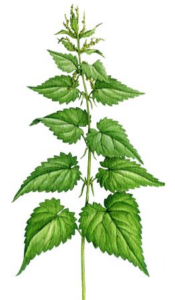
FORAGING & HARVESTING
Nettles grow readily in disturbed soils, along riverbanks, trail edges and in shaded, damp woodland environments.
If you plan to harvest them yourself, keep these guidelines in mind:
- Wear gloves (thicker gloves are best) and consider long sleeves
- Harvest plants no taller than knee height — once they mature, nettles shift their energy toward reproduction, sending compounds into the leaves that you don’t want to eat
- Focus on the top 4–6 inches of the plant — the youngest, most tender growth
- Use scissors or garden shears rather than pulling by hand so as not to pull the roots and kill the plant
- Harvest from clean areas, away from roadsides or sprayed land
SPRING NETTLE PESTO
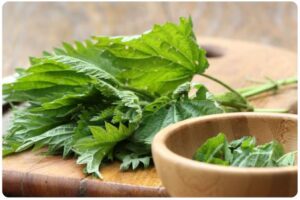
Ingredients
2–3 packed cups fresh nettle leaves (stems removed)
2–3 cloves garlic
½ cup olive oil, plus more to taste juice of one lemon
⅓ cup pine nuts, almonds or walnuts
½ cup parmesan (or ½ cup raw cashews for vegan)
Salt to taste
Method
1. Once harvested, remove the leaves from the stems (wear gloves for this part!)
2. Some people prefer to blanch nettles briefly to neutralize the sting, but blending them fully does this as well, so it’s optional.
3. Add leaves to a food processor or blender with garlic, nuts and parmesan (or cashews).
4. Pulse while drizzling in olive oil until you reach your preferred consistency
5. Add salt to taste.
Makes about 1 cup. Ready in 15 minutes
Store in a jar in the fridge with a thin layer of olive oil on top — keeps well for up to a week.
Or freeze in an ice cube tray.
Use it anywhere you’d use basil pesto: tossed with pasta, spread on toast, stirred into eggs
or dolloped on roasted vegetables.
* This post was originally printed in the Village Medicine Seattle’s Wellness Quarterly Magazine, 2Q26 Edition. Read and download the full publication

About The Author
Dr. Meghan Zech is a Naturopathic Physician and Fellow of the American Board of Naturopathic Oncology (FABNO) serving patients at Village Medicine Seattle. Meghan believes in an individualized approach to educate and empower patients in order to establish and support sustainable health and well-being.
Learn more about Dr. Zech